How to Price Raffle Tickets: Sell More, Raise More
March 24, 2026

When planning a raffle draw to raise funds for your nonprofit, choosing the right ticket price is key to achieving your fundraising goals.
Raffle ticket prices vary depending on the raffle — a small community basket raffle might sell tickets for $1 or $2, while a car raffle can command $50 or more. The right price comes down to your prize value, audience, and fundraising goal.
If the price is too high, potential buyers might lose interest, regardless of the attractiveness of the prizes. Conversely, if the price is too low, you may sell more tickets but still fall short of your fundraising goal. That’s why understanding how to price raffle tickets is so important—it’s all about finding the balance between affordability and value.
So how do you find the raffle price sweet spot? Whether you’re hosting a traditional raffle, online raffle, or 50 50 raffle, it’s all in the numbers.
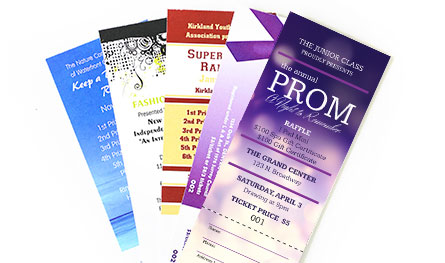
Key Factors to Consider When Pricing Raffle Tickets
Knowing how to price raffle tickets starts with understanding your fundraising event’s goals. Below, we break down all the factors contributing to common raffle ticket prices.
Fundraising goal
Start by identifying how much money your nonprofit organization needs to raise. This value should cover all raffle-related expenses and still leave you with your desired net proceeds.
Pro Tip: Always set a realistic goal based on your organization’s capacity and past fundraising results.
Raffle ticket costs
Account for the cost of designing, printing, or purchasing raffle tickets— even if you’re planning to buy perforated ticket card stock and print them yourself.
Pro Tip: The look and feel of your tickets affect your raffle’s perceived value. Professionally printed tickets boost perceived value and can make your raffle look more legitimate.
Raffle prize costs
To minimize overhead, think of some creative raffle prize ideas and try to solicit donations from local businesses and contacts.
Pro tip: Be sure to include any purchased items in your budget calculations, as you might still need to cover part of the cost for some raffle prizes.
Raffle ticket distribution costs
These are the costs of marketing and selling your tickets—such as posters, digital ads, or email campaign tools.
Pro Tip: Use free or low-cost digital channels first to stretch your budget while reaching more supporters.
Total expected raffle ticket sales
Raffle ticket sales revenue is a factor of two things: the number of tickets and the price at which they’re sold. These two variables should match up with your target customer.
Pro Tip: The better your prize and marketing strategy, the more tickets you’re likely to sell.
Number of raffle tickets
Estimate how many people are in your community and network. Factor in whether you have a team or selling them all yourself, and how exciting your top prize is—bigger prizes draw more interest.
Pro Tip: Offer quantity discounts to encourage bulk purchases—for example, three tickets for $5 each or 6 for $20.
Price of raffle tickets
Set a ticket price that matches the value of your prizes and feels affordable for your audience. Pricing raffle tickets at $100 for college students might make ticket sales challenging.
Pro Tip: Use round numbers—people are less likely to buy tickets priced at $3.76
Finalizing raffle ticket price and quantity
Once you know your total cost and goal, adjust the ticket price and quantity until the math aligns with your fundraising target. By fine-tuning these elements, you can ensure that your event is set up to raise more money than anticipated.
Pro Tip: Aim to exceed your goal slightly to account for unexpected expenses or lower-than-expected sales.
Calculate raffle ticket price
Use this formula:
(Fundraising Goal + Total Costs) ÷ Number of Tickets = Ticket Price
For example, let’s say your expenses include $75 for printing raffle tickets, $500 for prizes, and $50 for marketing materials. That adds up to $625 in total costs. Your goal is to raise $2000, which brings the total to $2625. If selling 1000 tickets is viable, you are looking at $2.63 per ticket.
Pro Tip: Always round up your final ticket price to ensure you cover all expenses and hit your goal.
Calculate raffle ticket quantity
Use this formula:
(Fundraising Goal + Total Costs) ÷ Ticket Price = Number of Tickets to Sell
Following the same example, if you want to sell each ticket for $3, you would need to sell 875 raffle tickets to reach your goal.
Pro Tip: Revisit your audience size before finalizing the quantity to make sure your target is realistic.
Raffle Ticket Price Calculator
To fine-tune your pricing strategy, consider using our Raffle Ticket Price Calculator. All you need to do is plug in your fundraising activity’s unique numbers, and you will get a suggested raffle ticket price.
|
|
|||||||||||||||||||||||||||||
How to Price Raffle Tickets
Knowing how much to charge for fundraising raffle tickets depends on your event’s goals, target audience, and the value of your prizes. Choosing the right pricing model—or combining several—can help attract participants and maximize your event’s profitability.
Single-Ticket Pricing
Single-ticket pricing is what it sounds like—you’re selling one ticket at a flat rate. This pricing approach is particularly effective at creating broad appeal and ensuring your raffle feels inclusive to all attendees. It also works well for any prize, from modest gift baskets to high-value items, and allows everyone to join in without feeling pressured to buy more.
Effective strategies to implement single-ticket pricing include:
- Keeping the price accessible: Set a low, round number (e.g., $2, $5) to remove barriers to entry and encourage impulse purchases.
- Highlighting ease and fairness: Emphasize that everyone has an equal chance to win, no matter how much they spend.
- Using scarcity to build urgency: Cap the total number of tickets available to increase perceived value.
- Featuring simple messaging: “One ticket, one chance to win!” resonates especially well with attendees who appreciate transparency and simplicity.
Bundled Pricing
Bundled pricing is a sales strategy where multiple items (in this case, raffle tickets) are sold together at a discounted rate. This strategy increases ticket sales and gives participants the feeling of getting a deal.
Bundles are particularly effective when you want to maximize revenue quickly or cater to attendees eager to increase their chances of winning.
To maximize the effectiveness of bundled pricing, try:
- Creating tiered bundles: Use psychological pricing (e.g., “1 for $5, 5 for $20, 10 for $35”) to make larger bundles look like better deals.
- Using visual comparisons: Display savings per ticket (e.g., “Save $15!”) to show added value clearly.
- Gamifying participation: Promote bundles as increasing your odds: “The more you buy, the better your chances!”
- Bundling with bonuses: Offer non-ticket bonuses like branded merchandise, drink coupons, or exclusive event perks for bundle buyers.
Early-Bird Pricing
Early-bird pricing creates urgency and builds momentum at the beginning of your campaign. It rewards early supporters and gets your fundraising off to a strong start.
By offering a limited-time discount or bonus for those who buy tickets early, you create a sense of scarcity that motivates quick action. This not only boosts initial cash flow but also generates buzz and word-of-mouth promotion as early buyers begin sharing the raffle with their networks.
Here’s what you need to use to make early-bird pricing work:
- Time-box offers: Limit the early-bird window to create urgency. Use countdown timers on your website or email campaigns.
- Tier pricing increases: Create stages (e.g., “$3 first week, $4 second week, $5 final week”) to encourage faster action.
- Use bonus entries: Instead of lower prices, offer double-entry tickets (“Buy 1, get 1 free”) to reward early purchases without cutting into revenue.
- Promote heavily: Announce early-bird pricing via email, social media, and at events as a limited-time opportunity.
Online Ticket Sales
Online raffle ticket sales have the potential to expand your organization’s reach to supporters who cannot attend in person. Online platforms allow you to promote your raffle through email, social media, and your nonprofit’s website, making it simple for people to buy tickets anytime, anywhere.
You can also incentivize online sales through exclusive deals. Plus, tracking sales and collecting participant data becomes more efficient, helping you measure campaign performance and follow up with engaged donors.
Boost online sales by:
- Offering exclusive online incentives: Create online-only raffles or prize bundles to motivate digital participation.
- Leveraging social sharing: Add incentives for sharing the raffle on social media (e.g., “Get 1 bonus entry when you share your purchase link!”).
- Optimizing mobile usability: Ensure the ticketing platform is mobile-friendly for frictionless purchasing on any device.
Using remarketing: Run paid ads targeting people who visited the ticket page but didn’t purchase, with messages like “Only 2 days left to enter!”
Conclusion
Knowing how to price raffle tickets ensures a successful fundraising event. By considering factors such as fundraising goals, ticket distribution costs, and prize values, you can establish a pricing strategy that maximizes ticket sales while remaining fair and accessible.
Ready to order your tickets? Browse our custom raffle tickets — professionally printed and shipped within one business day.
Back to blog Back to top